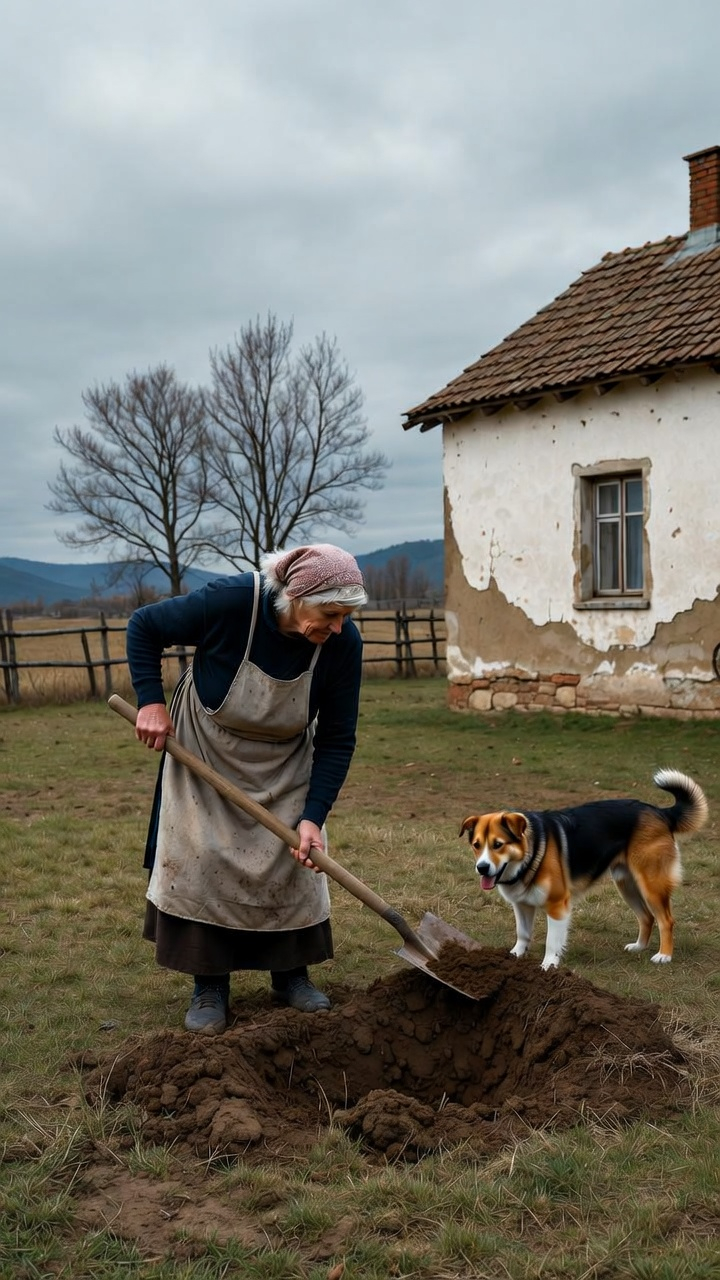
Margaret Lewis turned seventy with hands worn by years of soap and a heart full of names. She had lived four decades in the same house, a simple wooden home that creaked at dawn as if waking with her. There she raised three children, held the family together after her husband died too soon, and learned to turn exhaustion into routine and routine into love.
That morning, she woke as always, her white hair neatly combed, her habit of brewing strong coffee unchanged. She walked downstairs expecting life—a glass in the sink, footsteps in the hallway, the familiar hum of the television. Instead, she felt silence. Not peaceful silence—emptiness. She turned on the light, and her chest tightened. The photos were gone. The sofa was gone. The bookshelf had vanished. She ran through the house opening doors, each room answering the same way: empty drawers, erased memories, her life removed overnight.
On the kitchen table lay a folded note. She recognized the handwriting before reading it—Daniel, her oldest son. She read it once, then again, as if the words might change.
“Mom, we decided it’s best for you to manage on your own now. The house has been sold, and the money divided among the three of us. You’ll figure it out. Goodbye.”
The world shrank. At first, she didn’t cry. She stood still, the paper trembling in her hands, trying to understand when a lifetime of love had turned into inconvenience. She called Daniel—no answer. Laura—nothing. Michael—blocked. Then reality struck: her children had left her homeless.
She sat on the cold kitchen floor and cried harder than she had since burying her husband. But inside her, a stubborn voice whispered: Don’t die here. She opened her suitcase and counted her savings: two hundred dollars. Everything.
When she heard a key in the door, hope flared—only to die again. It was Mr. Carter, the real estate agent. He spoke of “pending details” as if she were a stranger. Before leaving, he mentioned cheap land in a small town called Hope Village.
The name felt like both irony and salvation.
“How much?” she asked.
“One thousand dollars. Land and a small house.”
It was almost everything she had left.
“I’ll take it,” she said, surprising even herself.
The next morning, she left.
Four hours later, she stepped into a place that felt forgotten by the world. Her house was worse than expected—broken wood, holes in the roof, no electricity, no water.
She sat in the dirt.
For a moment, she felt defeated.
Then she wiped her tears.
“If I cry, I sink. If I work… maybe I live.”
The first need was water.
At one house, a man named Frank Miller laughed at her.
“I’ve got water, but nothing’s free.”
He shut the door.
Humiliation burned, but she kept going.
At another house, Evelyn Brooks welcomed her warmly, offering water and food.
“There are still good people,” Evelyn said softly.
With borrowed tools, Margaret began cleaning her land.
On the third day, she noticed something hidden behind weeds—
A circle of stones.
A well.
Hope.
She began digging.
Pain screamed through her body.
Neighbors mocked her.
But she kept going.
On the fifth day—
Her shovel hit metal.
A buried box.
With help from Evelyn and George Walker, they pulled it out. Inside were documents… maps… and a small bottle of crystal-clear water.
“Property of Saint Benedict Spring,” Evelyn read.
A spring.
On her land.
Tests confirmed it.
The water was rare.
Valuable.
Life-changing.
Margaret didn’t hesitate.
She built something.
Small at first.
With help from Emma, David, Robert, and others.
A simple name:
Hope Village Water
It grew.
Quickly.
Then came trouble.
Frank demanded a share.
Threatened.
But Margaret stood firm.
“This is mine.”
Then came something worse—
Her children returned.
Suddenly loving.
Suddenly caring.
“Mom, we’re family,” they said.
Margaret looked at them calmly.
“When I had nothing, you left.”
Then came a corporate offer:
Two million dollars.
Her children begged her to accept.
Pressured her.
Demanded their share.
Margaret listened.
Then said one word:
“No.”
They were stunned.
“This is not just money,” she said. “This gives people work. Dignity. Purpose.”
Then she revealed the truth:
“This business isn’t mine.”
Silence.
“It belongs to everyone who built it.”
A cooperative.
Her real family stood behind her.
Evelyn.
George.
The workers.
Her children stood outside that circle.
Not by force.
But by choice.
“Make your own life,” she told them.
“I’m living mine.”
They left.
This time—
For good.
That night, there was a celebration.
Not for money.
But for something greater.
Belonging.
Margaret looked at the stars and whispered:
“Family isn’t inherited… it’s built.”
✨ Message
Sometimes what you lose…
Is what frees you.
And sometimes…
What you find beneath the ground—
Isn’t wealth.
It’s dignity.