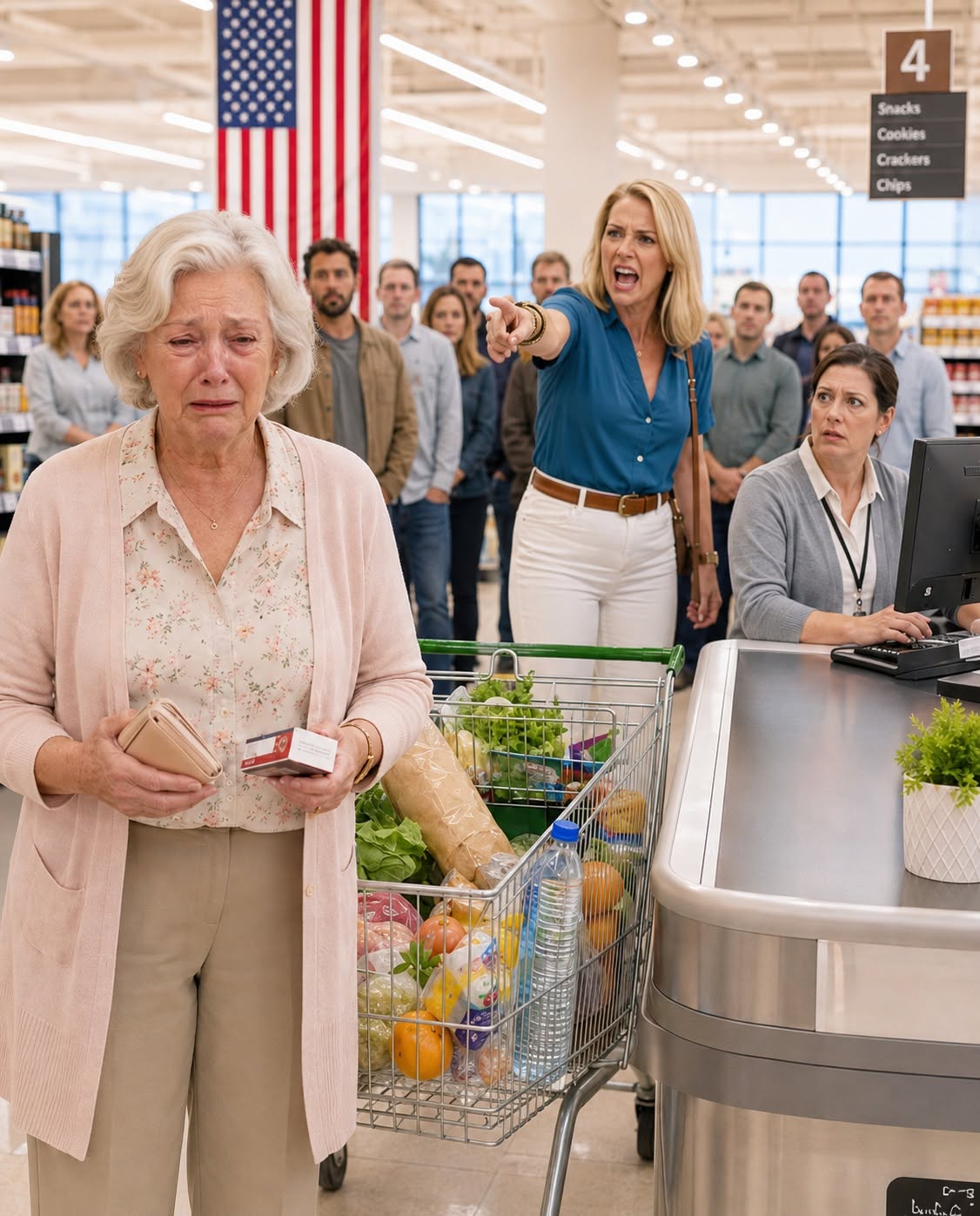
By the time my wife said, “Not my problem,” my eighty-two-year-old mother was already standing at the front door with her hospital bag in both hands.
Her appointment was in forty minutes.
My car was in the shop.
And the only working vehicle in our driveway was the SUV Vanessa was holding the keys to.
For a second, I genuinely thought I had misunderstood her.
I looked from Vanessa to my mother, then back again.
“What did you say?”
Vanessa took another slow sip of her iced coffee.
She was dressed for brunch—black yoga pants, spotless sneakers, oversized sunglasses pushed onto her head. My mother stood across from her in a carefully buttoned blue cardigan, clutching her bag against her chest.
Vanessa shrugged.
“I said it’s not my problem.”
The whole house seemed to stop breathing.
My mother’s fingers tightened around the handle of her hospital bag.
I stared at my wife.
“She needs to get to the hospital.”
Vanessa rolled her eyes like I had asked her to cancel a vacation instead of lend me a car for a medical appointment.
“Then call someone.”
She picked up her designer purse from the kitchen counter.
“I have brunch with the girls.”
That was when my mother lowered her eyes.
And somehow, that hurt more than anything Vanessa had said.
Mom had been awake since five that morning.
I knew because when I walked into the kitchen at six, she was already dressed in her best blue cardigan, her silver hair carefully combed, pretending she wasn’t nervous.
We had waited three months for this specialist appointment.
Three months of tests.
Three months of uncertainty.
Three months of Mom insisting she was “fine” whenever I caught her staring too long at the calendar.
And despite all of that, she had spent part of the previous evening making banana bread.
For Vanessa.
Because months earlier, Vanessa had casually mentioned that she liked my mother’s banana bread.
Mom had even wrapped an extra slice in foil that morning.
“In case Vanessa wants breakfast,” she had said.
Now the foil-wrapped slice was still sitting untouched on the kitchen counter.
Vanessa never even looked at it.
She looked at me instead.
“You always do this, David.”
“Do what?”
“Make your mother’s problems my problem.”
My mother’s face changed slightly.
Barely enough for Vanessa to notice.
But I noticed.
I had been noticing little expressions like that for years.
Mom trying not to react.
Mom pretending something didn’t hurt.
Mom changing the subject whenever Vanessa made a cutting remark.
Mom telling me not to worry because she didn’t want to create problems in my marriage.
And standing there that morning, something inside me finally cracked.
Not loudly.
Not dramatically.
It was cleaner than that.
Almost peaceful.
Like a rope I had been holding for years had finally snapped, and instead of falling, I realized I didn’t have to keep pulling anymore.
I nodded once.
“Okay.”
Vanessa blinked.
For the first time, she seemed uncertain.
She had expected an argument.
Maybe she expected me to beg.
Maybe she thought I would remind her that the SUV she called “her car” was a vehicle I had paid for, insured, maintained, and kept running.
Maybe she expected me to bring up everything my mother had done for us.
Especially what happened when Vanessa’s boutique nearly collapsed.
Vanessa had been terrified.
Payroll was due.
Sales were down.
Bills were piling up.
I had been scrambling to help her keep the business alive.
And my mother?
She quietly paid three months of our mortgage.
Vanessa knew that.
She knew every dollar Mom had saved us from paying toward the house had gone directly into keeping her boutique alive.
Mom never asked for repayment.
She never held it over Vanessa’s head.
She never even mentioned it after handing me the checks.
She had just smiled and said, “You two need breathing room.”
At the time, Vanessa hugged her.
She cried.
She called Mom an angel.
That had been eighteen months ago.
Apparently angels became inconveniences once the crisis passed.
I watched Vanessa turn toward the garage.
“Enjoy brunch,” I said.
She stopped.
“What?”
“I said enjoy brunch.”
Her mouth opened slightly.
That wasn’t the response she expected.
I pulled out my phone.
“I’ll get Mom there another way.”
“Fine.”
Vanessa tossed her hair behind one shoulder.
“But don’t act weird when I get back.”
“I won’t.”
She narrowed her eyes.
There was something about my tone that made her hesitate.
Then pride won.
She walked into the garage.
A moment later, the SUV engine started.
My mother stood beside me looking embarrassed.
“I’m sorry,” she whispered.
I turned toward her.
“For what?”
“For causing trouble.”
Those four words almost destroyed me.
My mother was preparing to hear whether the suspicious mass they had found near her pancreas might be cancer.
And somehow she believed she was causing trouble because she needed a ride.
I took her hospital bag.
“You didn’t cause anything.”
She looked toward the garage.
“Vanessa has her own life, David.”
“So do you.”
“She’s your wife.”
“And you’re my mother.”
Mom sighed.
“I don’t want you fighting because of me.”
“We’re not fighting because of you.”
That was the truth.
This wasn’t really about the car.
It wasn’t even about the appointment.
It was about six years of watching kindness flow in only one direction.
Vanessa needed help with her boutique?
Mom helped.
Vanessa had pneumonia?
Mom cooked soup every afternoon for a week.
Vanessa’s parents couldn’t attend our tenth anniversary dinner because they were traveling?
Mom organized everything.
When Vanessa’s younger sister needed a temporary place to stay after a breakup, Mom gave up her downstairs bedroom and moved into the small guest room upstairs for nearly two months.
Yet whenever Mom needed something, Vanessa acted as though we had handed her a court summons.
A ride.
A grocery pickup.
Help carrying something.
An hour of company.
Everything was an interruption.
Everything was “too much.”
Everything was “not her problem.”
I requested a rideshare.
No drivers.
I tried again.
Nothing.
Our neighborhood sat outside the busiest part of town, and that morning demand was apparently high.
I checked the time.
Thirty-four minutes until Mom’s appointment.
She noticed my face.
“We can reschedule.”
“No.”
“David.”
“We waited three months.”
“It’s okay.”
“No, Mom. It isn’t.”
I called my neighbor, Frank.
No answer.
I called my friend Marcus.
He was already at work forty minutes away.
Then I called my twenty-six-year-old daughter, Chloe.
She answered on the second ring.
“Dad?”
“I need a favor.”
Her voice changed immediately.
“What happened?”
“Grandma has her specialist appointment this morning. My car’s in the shop, and I need to get her there.”
“Where’s Mom?”
I paused.
Chloe understood from the silence.
“Seriously?”
“She took the SUV.”
“For brunch?”
“Yes.”
There was another pause.
Then Chloe said, “I’m coming.”
“You’re at work.”
“I can leave.”
“It’s twenty-five minutes out of your way.”
“Dad.”
Her voice hardened.
“That’s Grandma.”
Those words told me everything Vanessa’s hadn’t.
Chloe arrived twelve minutes later in her little silver sedan, still wearing her hospital ID badge.
She worked as a physical therapist at a rehabilitation center.
She jumped out before the engine fully stopped.
“Grandma.”
Mom smiled when she saw her.
“Oh, sweetheart, you didn’t need to leave work.”
“Yes, I did.”
Chloe hugged her gently.
Then she looked at me.
“Where’s Mom?”
“Brunch.”
Chloe closed her eyes.
I could see anger building.
“Not today,” I said.
She understood.
We needed to focus on Mom.
Chloe drove.
I sat in the back beside my mother.
We arrived nine minutes late.
Thankfully, the specialist still saw us.
The waiting room smelled like antiseptic and burnt coffee.
Mom sat between Chloe and me, holding a clipboard with trembling fingers.
She tried to fill out the forms.
Her handwriting, usually precise, wandered slightly.
I took the clipboard.
“I’ll do it.”
“I can write my own name.”
“I know.”
That made her smile.
Chloe leaned closer.
“Grandma, whatever happens, we’re here.”
Mom squeezed her hand.
The nurse called her name.
We followed.
After another round of waiting, a gastroenterologist named Dr. Patel entered the room carrying a tablet.
His expression was professional but not grim.
That mattered.
I watched his face the way people watch storm clouds.
He explained the scans.
There was a mass.
They still needed more information.
The imaging showed characteristics that required biopsy, but there were also reasons not to assume the worst.
Mom asked only one question.
“Is it cancer?”
Dr. Patel didn’t lie.
“We don’t know yet.”
Mom nodded.
I hated how small she looked in that moment.
Not weak.
Just suddenly old.
Until then, part of me had continued seeing her as the same woman who raised three children after my father died, balanced two jobs, repaired her own kitchen sink, and once drove eight hours overnight because I had called her from college saying I was sick.
But sitting on that examination table, Mom looked eighty-two.
She looked like someone who had spent her whole life being strong because other people needed her to be.
Dr. Patel scheduled the biopsy for the following Wednesday.
After he left, Mom stared at the floor.
Chloe wrapped both arms around her.
“You’re coming home with me tonight,” she said.
Mom laughed softly.
“I have a home.”
“I know.”
“Then why am I going to yours?”
“Because I have better television.”
That made Mom laugh harder.
It broke the tension.
I was grateful.
On the drive home, my phone buzzed several times.
Vanessa.
First a text.
Where are you?
Then another.
Why isn’t anyone answering?
Then:
Are you seriously mad about this?
I ignored all three.
Ten minutes later:
David, stop being childish.
Chloe saw the notification when my phone lit up in the cup holder.
“She called you childish?”
“Drive.”
“She abandoned Grandma on the day of a possible cancer appointment and you’re childish?”
“Chloe.”
“I’m just asking.”
Mom touched Chloe’s arm.
“Your mother and father will work it out.”
Chloe looked at her through the mirror.
“Grandma, you always defend everyone.”
Mom smiled faintly.
“It’s a bad habit.”
“No,” Chloe said. “Being kind isn’t a bad habit. People taking advantage of it is.”
I looked out the window.
My daughter had just said what I should have admitted years earlier.
When we got back to the house, Vanessa still wasn’t home.
The banana bread sat on the counter.
I picked up the foil-wrapped slice.
Mom noticed.
“Don’t throw that away.”
“I wasn’t going to.”
“Vanessa might want it later.”
I stared at her.
Even now.
Even after what happened.
My mother was still thinking about Vanessa.
I put the slice in Mom’s hospital bag.
“You’re taking it.”
She smiled.
“Fine.”
Chloe decided to drive Mom to her apartment and stay with her for a few hours.
Before leaving, Mom hugged me.
“Don’t do anything foolish.”
“I won’t.”
“I mean it.”
“So do I.”
She looked into my face for several seconds.
I wondered whether she knew what I was about to do.
Probably.
Mothers usually know.
After they left, I walked into my home office and shut the door.
Then I opened the file cabinet.
Inside was a folder labeled VBM Retail LLC.
Vanessa believed I had forgotten how much money we had put into her boutique.
I hadn’t.
I knew every dollar.
The original investment had been $90,000.
Then another $35,000 after the first year.
Then $22,000 when the lease increased.
Then payroll support.
Then inventory.
Then advertising.
Then emergency operating funds.
I had never totaled everything in one place because doing so made me uncomfortable.
That morning, I did.
$241,680.
Nearly a quarter-million dollars.
Some came from our joint savings.
Some came from my personal consulting income.
Some indirectly came from Mom paying our mortgage when Vanessa’s business was drowning.
And for the last eight months, Vanessa had been using a business line of credit guaranteed by me.
I opened our banking portal.
There were recurring transfers every month from my consulting account into the boutique’s operating account.
Rent.
Insurance.
Payroll gaps.
Marketing.
Small amounts Vanessa frequently described as temporary.
Altogether, another $38,400.
I called our accountant, Martin.
“David.”
“Are you busy?”
“For you, mildly.”
“I need to separate my personal finances from Vanessa’s boutique.”
Silence.
Then:
“Completely?”
“Yes.”
Another pause.
“Is this a marriage issue?”
“It may become one.”
“Then before you move anything, talk to an attorney. Do not empty joint accounts. Do not hide assets. Do not make emotional transfers.”
“I’m not trying to punish her.”
“Good.”
“I just want to stop funding the boutique with my individual income.”
“That can be done, but document everything.”
“I will.”
Martin gave me the name of a family attorney named Rachel Ellis.
I called her office.
By some miracle, she had a cancellation that afternoon.
I booked it.
Then I looked at the SUV documentation.
The vehicle was titled in my name.
Vanessa called it hers because she drove it most often.
I paid the loan off three years earlier.
Insurance came from my account.
Maintenance came from my account.
Fuel often came from my account.
It was astonishing how much of our life I had financed automatically simply because I thought that was what a good husband did.
I wasn’t angry about the money.
I was angry about what the money had hidden.
Dependence disguised as entitlement.
Sacrifice disguised as obligation.
Kindness treated like a permanent service.
Vanessa arrived home at 2:17.
I heard the garage door.
Then heels crossing the kitchen.
“David?”
I stayed in the office.
She opened the door without knocking.
“You ignored my texts.”
“Yes.”
“Where’s your mother?”
“With Chloe.”
Vanessa exhaled.
“Good. So everything worked out.”
I looked at her.
That sentence told me more than she understood.
Everything worked out.
As though the outcome erased her behavior.
As though someone else fixing what she refused to help with meant nothing had happened.
“What did the doctor say?” she asked.
I watched her carefully.
For one small second, I wanted to believe she cared.
“We don’t know yet. She needs a biopsy.”
Vanessa’s face softened.
“Oh.”
I waited.
No follow-up question.
No concern about Mom.
No offer to call her.
Instead she glanced toward the papers on my desk.
“What are you doing?”
“Reviewing finances.”
Her expression changed.
“The boutique?”
“Yes.”
She folded her arms.
“I knew this was about money.”
“No. It’s about respect.”
“You’re overreacting.”
“Am I?”
“Yes.”
“It was one ride.”
“No, Vanessa.”
She rolled her eyes.
“Here we go.”
I stood.
“This has been happening for years.”
“What has?”
“You taking from my mother and treating her like an inconvenience.”
Vanessa stared at me.
“Oh my God.”
“Don’t.”
“No, seriously. Your mother lives her own life. I am not obligated to rearrange mine every time she needs something.”
“She needed to go to a hospital.”
“You were there.”
“My car is in the shop.”
“You found another ride.”
“My daughter left work.”
“And?”
I almost laughed.
Not because it was funny.
Because I suddenly saw the problem without any fog around it.
Vanessa truly didn’t understand.
“And you were ten feet from a perfectly good vehicle.”
“It was my brunch.”
“It was my mother’s medical appointment.”
“I made plans.”
“So had she.”
“That’s different.”
“Why?”
“Because hers was medical.”
I waited.
Vanessa’s expression shifted when she heard herself.
For one second, she looked trapped by her own logic.
Then she recovered.
“You know what I mean.”
“I actually don’t.”
She dropped her purse onto the chair.
“So what? You’re going to punish me financially because I didn’t drive your mother?”
“I’m not punishing you.”
“You’re reviewing boutique finances.”
“Yes.”
“To punish me.”
“No. I’m reviewing boutique finances because this morning taught me something I should have realized years ago.”
“What?”
“You think everything I provide is yours automatically, but anything you have is yours alone.”
“That’s ridiculous.”
“Is it?”
“Yes.”
I opened the folder.
“When your boutique almost failed, my mother paid our mortgage for three months.”
“I know.”
“That freed up nearly eleven thousand dollars.”
“She offered.”
“Yes.”
“And we thanked her.”
“She also cooked for you when you were sick.”
Vanessa groaned.
“David.”
“She hosted your sister.”
“Stop listing favors.”
“That’s the point. Mom never listed them.”
Vanessa’s face hardened.
“So now I’m supposed to owe your mother forever?”
“No.”
“Because that’s what this sounds like.”
“No, Vanessa. You were supposed to give her a ride.”
Silence.
That was the entire argument.
Not lifelong servitude.
Not repayment.
Not debt.
A ride.
A forty-minute interruption to help an eighty-two-year-old woman get to an appointment she was terrified to attend.
Vanessa looked away first.
Then she said something that changed the course of our marriage.
“You should have married your mother.”
I stared at her.
She immediately knew she had crossed a line.
But instead of apologizing, she doubled down.
“I’m serious. Every decision in this house somehow involves her.”
“No.”
“Yes.”
“No, Vanessa. She asks for almost nothing.”
“She’s always around.”
“She comes for dinner twice a month.”
“She calls you constantly.”
“She calls me maybe three times a week.”
“She depends on you.”
“I’m her son.”
“And I’m your wife.”
“Yes.”
“So I should come first.”
“You’re confusing coming first with everyone else coming last.”
Vanessa went silent.
I sat back down.
“I met with an attorney this afternoon.”
Her face drained.
“You what?”
“I’m not filing anything today.”
“You went to a divorce lawyer?”
“Yes.”
“Over a car ride?”
“Stop calling it a car ride.”
“What else was it?”
“A measurement.”
She stared.
“Of what?”
“Of your character.”
She recoiled as if I had slapped her.
I hated saying it.
But I meant it.
“I’ve spent years explaining away things that hurt people because I love you.”
Vanessa swallowed.
“You’re unbelievable.”
“Maybe.”
“You’d throw away fourteen years because I went to brunch?”
“No. Fourteen years brought us here.”
She paced once across the office.
“What did the lawyer tell you?”
“That if we separate, we should handle finances carefully and legally.”
Vanessa laughed nervously.
“You’re actually serious.”
“Yes.”
She looked at the boutique folder again.
Then something shifted in her eyes.
Fear.
Not about the marriage.
About the business.
“You’re not cutting me off.”
There it was.
Not “You’re not leaving me.”
Not “We can fix this.”
Not “I’m sorry.”
You’re not cutting me off.
I folded my hands.
“I’m stopping voluntary transfers from my consulting income into the boutique.”
“You can’t.”
“I can.”
“We have payroll Friday.”
“I know.”
“Rent is due next week.”
“I know.”
“David, don’t play games.”
“I’m not.”
“You’ll destroy my business.”
“No. Your business will have to support itself.”
“You know it can’t.”
“Then we have a larger problem.”
Her eyes filled.
I wish I could say I felt satisfaction.
I didn’t.
I felt exhausted.
Vanessa sat across from me.
“You promised you believed in me.”
“I did.”
“Then why are you doing this?”
“Because believing in you became financing you indefinitely.”
“I’m close to turning a corner.”
“You’ve been close for five years.”
“That’s what business is like.”
“Maybe.”
She wiped at one eye.
“I have employees.”
“I know.”
“They depend on me.”
“Yes.”
“And you’d hurt them because you’re angry?”
“I’m giving you thirty days.”
She stared.
“What?”
“I will cover the existing commitments for this month. After that, no more personal funding.”
“You already decided that?”
“Yes.”
“I’m your wife.”
“I know.”
She stood.
“You’re controlling me.”
“No. Control would be taking your business from you.”
“That’s what you’re doing.”
“No. I’m giving it back to you.”
She had no answer.
That night, Vanessa slept in the guest room.
The next morning, she left before I woke up.
She did not call Mom.
She did not ask about the biopsy.
For the next six days, our house became a waiting room.
Mom’s biopsy approached.
Vanessa spoke to me only about the boutique.
Could I extend funding for sixty days?
Could I use my consulting income to cover a vendor bill?
Could I refinance something?
Could I speak with the landlord?
Every conversation returned to money.
I said no to all of it.
Not cruelly.
Simply.
“No.”
Meanwhile, Chloe drove Mom to a pre-biopsy appointment.
I attended another consultation.
My brother Steven flew in from Colorado.
My sister Lisa called every night.
The family gathered around Mom.
Vanessa remained outside that circle by choice.
The evening before the biopsy, I went to Mom’s apartment.
She was packing her hospital bag.
Again.
The blue cardigan lay folded on her bed.
I picked it up.
“You wearing this tomorrow?”
“It’s lucky.”
“Since when?”
“Since last week.”
I laughed.
She smiled.
Then she became serious.
“Is something happening between you and Vanessa?”
I sat beside her.
“Yes.”
Mom sighed.
“Because of me.”
“No.”
“David.”
“Because of us.”
She studied me.
“I don’t want your marriage ending because I needed a ride.”
“It isn’t.”
“Then what is happening?”
I told her.
Not every detail.
Enough.
Mom listened quietly.
When I finished, she touched my hand.
“I helped you because you’re my son.”
“I know.”
“I helped Vanessa because she’s your wife.”
“I know.”
“I never expected repayment.”
“I know.”
She squeezed my fingers.
“Then don’t turn my kindness into a weapon.”
That sentence stayed with me.
“I’m not trying to.”
“Good.”
“But I’m also not going to pretend her behavior is acceptable anymore.”
Mom nodded slowly.
“That’s different.”
“Yes.”
She looked toward the window.
“When your father died, I spent years being angry that the world kept moving.”
I waited.
“People went grocery shopping. They laughed. They complained about traffic. I wanted to scream at them because my world had ended and theirs hadn’t.”
Her voice trembled.
“Then I realized pain doesn’t make us more important than other people. And happiness doesn’t excuse us from caring when someone else is hurting.”
I swallowed.
Mom looked at me.
“Vanessa may learn that. Or she may not.”
“What if she doesn’t?”
“Then you decide what kind of life you want.”
The biopsy went well.
The waiting afterward was worse.
Three days.
Then four.
Then five.
On the sixth morning, Dr. Patel called.
The mass was not pancreatic cancer.
It was a rare benign cystic lesion that still needed monitoring and possibly surgery later, but it was not the diagnosis we had feared.
I sat at my desk and cried.
Full, embarrassing, grateful tears.
Then I drove to Mom’s apartment.
Chloe was already there.
So were Steven and Lisa.
We hugged.
We laughed.
Mom complained that everyone was making too much fuss.
Chloe ordered pizza.
Steven opened sparkling cider because Mom’s medications meant no champagne.
For the first time in weeks, the room felt light.
Then the doorbell rang.
It was Vanessa.
She stood outside holding flowers.
Mom smiled immediately.
“Vanessa.”
Vanessa stepped in awkwardly.
“I heard the news.”
Chloe looked at me.
I hadn’t told her.
Lisa probably had.
Vanessa handed Mom the flowers.
“I’m glad you’re okay.”
Mom accepted them.
“Thank you.”
Vanessa glanced at everyone.
“I’m sorry I wasn’t around much.”
Silence.
Mom rescued her.
“We were all scared.”
“Yes.”
Vanessa nodded.
Then she looked at me.
“Can we talk?”
I followed her into the hallway.
She crossed her arms.
“I didn’t want to do this here.”
“Then don’t.”
“The landlord is threatening default.”
I stared at her.
She had come to my mother’s celebration to discuss the boutique.
“Vanessa.”
“I know. Bad timing.”
“Then why?”
“Because I need an answer today.”
“What answer?”
“The $25,000.”
“No.”
Her face tightened.
“You didn’t even think.”
“I already did.”
“If I don’t pay the vendor, they freeze the account.”
“I’m sorry.”
“You’re sorry?”
“Yes.”
“David, this is my entire life.”
“No.”
She blinked.
“What?”
“Your business is not your entire life.”
“You know what I mean.”
“I used to.”
She stared past me toward Mom’s apartment.
Laughter came through the door.
For once, Vanessa looked like the person outside looking in.
Maybe she finally understood how many times she had made Mom feel exactly that way.
“You’re choosing them,” she whispered.
“No.”
“Yes, you are.”
“I’m choosing boundaries.”
“Same thing.”
“It isn’t.”
She laughed bitterly.
“You think you’re some hero now?”
“No.”
“You think everyone in there is going to applaud you?”
“No.”
“You humiliated me.”
“How?”
“You stopped paying.”
“I gave you thirty days.”
“You knew I couldn’t survive.”
“Then the boutique was already failing.”
She turned away.
That was the sentence Vanessa couldn’t fight.
Because we both knew it was true.
Her boutique hadn’t been surviving.
I had been keeping it alive.
There is a difference.
Three weeks later, Vanessa announced she was closing the store.
She blamed me at first.
Then the economy.
Then the landlord.
Then online shopping.
Then her suppliers.
Then her staff.
Everyone except herself.
But when the accountant reviewed the books, reality became impossible to avoid.
The boutique had lost money for four consecutive years.
Vanessa had been ordering too much inventory, discounting too late, spending heavily on branding, events, furniture, travel, and social media campaigns that generated attention but little profit.
She had built a beautiful business that could not support itself.
I had funded the illusion.
When we met with Martin, he placed the reports on the table.
Vanessa looked at them for nearly ten minutes.
Finally, she whispered, “I thought I was closer.”
Martin answered gently.
“You weren’t.”
She cried.
Not dramatically.
Not manipulatively.
For the first time, I think she genuinely saw what had happened.
“I wasted everything,” she said.
I surprised myself.
“No.”
She looked at me.
“You built something. It didn’t work.”
“That’s wasting.”
“No. Refusing to learn would be wasting.”
Martin quietly excused himself.
Vanessa sat across from me.
“I hate you for being calm.”
“I’m not calm.”
“You look calm.”
“I’m tired.”
She nodded.
“So am I.”
For several minutes, neither of us spoke.
Then Vanessa said, “I called your mother.”
I looked up.
“When?”
“Yesterday.”
“What did you say?”
“I apologized.”
That surprised me.
“Did she accept?”
“She said I didn’t need her forgiveness.”
I smiled.
“That sounds like Mom.”
“She also said something else.”
“What?”
“She said I should stop asking everyone else to protect me from the consequences of my own choices.”
I laughed despite myself.
Vanessa almost smiled.
“She’s sharper than people think.”
“I know.”
“She made me angry.”
“I’m sure.”
“Then I cried for two hours.”
I didn’t know what to say.
Vanessa looked down.
“I was horrible that morning.”
“Yes.”
“I kept telling myself I had plans.”
“Yes.”
“And then after I left, I knew.”
“Knew what?”
“That I should turn around.”
I stared at her.
She wiped her eyes.
“I got three miles down the road and thought about turning around.”
“Why didn’t you?”
“Pride.”
That answer hurt because I believed it.
“I didn’t want to walk back in and admit I had been selfish.”
“So you kept going.”
“Yes.”
She laughed without humor.
“And then at brunch, I barely spoke. Everyone kept asking what was wrong. I told them you were being dramatic about your mother.”
I said nothing.
“One of the women asked what the appointment was for.”
Vanessa swallowed.
“I told her.”
“What happened?”
“She stared at me.”
“Who?”
“Rachel.”
One of Vanessa’s oldest friends.
“She said, ‘You left an eighty-two-year-old woman waiting for a cancer appointment because you wanted eggs Benedict?’”
I almost smiled.
Vanessa shook her head.
“She said it in front of everyone.”
“What did you say?”
“Nothing.”
“That must have hurt.”
“It did.”
She looked at me.
“But mostly because she was right.”
That was the first conversation in weeks that felt honest.
Not fixed.
Not forgiven.
Honest.
Vanessa and I still separated.
Not immediately.
Not as revenge.
We spent four months in counseling.
Some sessions were brutal.
I learned things about myself too.
I had used money to avoid conflict.
Instead of telling Vanessa no years earlier, I had kept funding the boutique because I liked being the person who solved problems.
I had told myself that was generosity.
Sometimes it was.
Sometimes it was cowardice.
Vanessa admitted she had grown resentful of Mom because Mom’s generosity made her feel inadequate.
Every banana bread.
Every thoughtful call.
Every favor.
Vanessa didn’t experience them as kindness.
She experienced them as evidence that she wasn’t as selfless.
Instead of confronting that insecurity, she turned Mom into the villain.
“She made me feel judged,” Vanessa admitted one afternoon.
“Did she judge you?”
“No.”
“Then who did?”
Vanessa looked down.
“Me.”
That realization changed something.
But not enough to erase years.
We moved into separate homes for six months.
Vanessa rented a small apartment near the retail district.
I stayed in our house.
The SUV stayed with me.
She didn’t argue.
For the first time since I had known her, Vanessa got a regular job.
A regional clothing company hired her as a merchandising manager.
She hated the first month.
Then she discovered she was good at it.
Very good.
She had always been talented.
What she hadn’t been was disciplined with money.
Working inside a larger company gave her structure.
Budgets.
Deadlines.
Accountability.
She began paying down the remaining boutique debt herself.
Not because I demanded it.
Because she wanted to.
Mom continued seeing her doctors.
The cyst remained stable.
Her health slowly improved.
She still made banana bread.
She still tried to give everyone the biggest slice.
One Sunday afternoon, nearly eight months after the morning that changed everything, Vanessa came to Mom’s apartment alone.
I wasn’t supposed to be there.
I had stopped by to repair a loose cabinet hinge.
When Vanessa knocked, Mom let her in.
She carried a grocery bag.
“I brought lunch,” Vanessa said.
Mom looked inside.
“Soup?”
“And sandwiches.”
Mom smiled.
“You cooked?”
“Don’t insult me.”
Mom laughed.
I stayed in the kitchen, quiet.
Vanessa didn’t know I was there.
They sat in the living room.
After a few minutes, Vanessa said, “I’ve wanted to ask you something.”
“Ask.”
“Why were you always so nice to me?”
Mom laughed softly.
“What kind of question is that?”
“A serious one.”
“You were my son’s wife.”
“That can’t be the whole reason.”
“No.”
“Then why?”
Mom was quiet for a moment.
“When David brought you home the first time, you were nervous.”
“I was terrified.”
“I know.”
“You knew?”
“You rearranged my salt and pepper shakers three times.”
Vanessa laughed.
“I did?”
“Yes.”
Mom continued.
“You wanted me to like you so badly.”
“I did.”
“And I did like you.”
“Even later?”
“Yes.”
“Even when I was awful?”
Mom paused.
“Liking someone and approving of everything they do are different things.”
Vanessa was silent.
Then she said, “I’m ashamed of that morning.”
“I know.”
“I’ve replayed it a thousand times.”
“Don’t.”
“How can I not?”
“Because shame is only useful if it leads somewhere.”
Vanessa sniffed.
“I should have driven you.”
“Yes.”
A long silence followed.
Mom didn’t soften the answer.
Vanessa whispered, “I’m sorry.”
“I know.”
“No. I need you to hear it. I’m sorry I made you feel like you were a burden. You weren’t.”
Mom’s voice became gentle.
“I know that now.”
That broke something in me.
I hadn’t realized Mom had doubted it.
Vanessa started crying.
Mom did too.
I stepped quietly out the back door before either of them saw me.
Some moments don’t need witnesses.
Three weeks later, Vanessa called.
“I want to come home.”
I didn’t answer immediately.
She rushed to continue.
“Not because I need money.”
“I know.”
“Not because the apartment is terrible.”
“Is it?”
“The upstairs neighbor owns a treadmill and apparently trains at midnight.”
I laughed.
Then she became serious.
“I miss you.”
“I miss you too.”
“But?”
“But missing someone isn’t enough.”
“I know.”
That answer mattered.
A year earlier she would have argued.
Now she said, “What would be enough?”
“I don’t know.”
“Can we figure it out?”
We did.
Slowly.
Vanessa moved back six weeks later.
Not everything became perfect.
That isn’t how life works.
We fought.
We disagreed.
Sometimes old habits appeared.
But there was one phrase Vanessa never used again.
“Not my problem.”
She learned that marriage does not mean carrying every burden equally.
It means refusing to stand comfortably beside someone you love while they carry something unbearable alone.
The following spring, Mom needed minor surgery related to the cyst.
Nothing urgent.
Nothing dangerous.
But it required an early hospital arrival.
The appointment was scheduled for 6:30 in the morning.
I set my alarm for five.
When I walked into the kitchen, Vanessa was already there.
Coffee brewed.
Mom’s hospital bag sat beside the door.
And the SUV was warming in the driveway.
Vanessa wore sweatpants and an old college sweatshirt.
No makeup.
No designer purse.
No brunch.
She handed me coffee.
“I’m driving.”
“You sure?”
She gave me a look.
“David.”
I smiled.
“Just asking.”
Mom came downstairs five minutes later wearing the same blue cardigan.
Vanessa walked toward her.
“Ready?”
Mom nodded.
“Ready.”
Vanessa picked up the hospital bag.
Mom tried to take it.
“I can carry that.”
“I know.”
“Then why are you carrying it?”
“Because I want to.”
Mom smiled.
On the drive, I sat in the back.
Mom and Vanessa talked in front.
Mostly about recipes.
Banana bread, naturally.
At one point, Mom complained that Vanessa always added too much cinnamon.
Vanessa insisted there was no such thing.
I watched them argue and smiled.
The hospital visit went smoothly.
On the way home, Mom asked us to stop at a bakery.
She bought three pastries.
One for me.
One for herself.
And one for Vanessa.
Vanessa took hers.
Then she broke it in half and handed part back to Mom.
“Too much sugar.”
Mom stared at her.
“You’re becoming bossy.”
“I learned from you.”
That afternoon, while Mom napped on our couch, Vanessa and I sat outside.
The backyard was quiet.
She looked toward the window where Mom slept.
“Do you ever think about that morning?”
“Yes.”
“So do I.”
“I know.”
“You almost left me.”
“Yes.”
She looked down.
“I almost lost everything because I couldn’t give someone forty minutes.”
“It wasn’t forty minutes.”
“I know.”
She looked at me.
“It was who I had become.”
I nodded.
Vanessa reached for my hand.
“I’m glad you stopped paying for the boutique.”
That surprised me.
“Really?”
“No.”
I laughed.
She smiled.
“Okay, I hated you for it.”
“That sounds more accurate.”
“But I needed it.”
She took a breath.
“I had started believing love meant nobody should ever tell me no.”
I squeezed her hand.
“I helped create that.”
“Maybe.”
“We both did.”
She leaned against my shoulder.
Inside, Mom woke up and immediately started complaining that we had let her sleep too long.
Vanessa stood.
“I’ll make tea.”
I grabbed her hand.
“One second.”
She looked at me.
“Thank you.”
“For what?”
I nodded toward the house.
“For learning.”
Her eyes filled slightly.
“Thank you for letting me.”
Years later, people in our family still remembered the hospital morning.
Not because of the cruelty.
Because of what came after.
Chloe eventually married.
At her wedding, Mom danced slowly with me.
She was eighty-six.
Still wearing blue whenever she wanted luck.
Vanessa gave a speech.
Halfway through, she talked about family.
She didn’t mention the SUV.
She didn’t mention brunch.
She didn’t mention the boutique.
She simply said:
“Family isn’t about deciding whose problem something is. It’s about noticing when someone you love is standing at a door with more than they can carry—and picking up the bag.”
Mom cried.
So did I.
Vanessa looked across the room at us.
And in that moment, I understood something I wish I had learned much earlier.
Setting a boundary is not the opposite of love.
Sometimes it is the only thing that gives love a chance to become healthy again.
If I had continued paying every bill, solving every problem, swallowing every insult, and explaining away every selfish choice, Vanessa might never have changed.
I might have grown bitter.
Mom might have spent the rest of her life believing she was a burden.
Our daughter might have learned that love meant tolerating disrespect.
Instead, one ugly morning forced all of us to see the truth.
Vanessa had to learn gratitude.
I had to learn boundaries.
Mom had to stop apologizing for needing people.
And our family had to decide whether kindness was going to remain something we talked about or something we actually practiced.
The answer came years later on another early morning.
Mom was ninety.
Her walking had slowed considerably.
Vanessa and I were preparing to take her to a routine appointment.
Nothing serious.
When Mom reached the front door, she realized she had forgotten her glasses.
“I’ll get them,” Vanessa said.
“No, I can go.”
“Stay there.”
Mom frowned.
“I’m not helpless.”
“I know.”
Vanessa hurried upstairs.
Mom turned toward me.
“She bosses me around.”
“You created a monster.”
Mom smiled.
“I like her better now.”
I laughed.
Vanessa returned carrying the glasses.
And Mom’s cardigan.
And her water bottle.
And the small bag she used for appointments.
“You forgot half your life,” Vanessa said.
Mom rolled her eyes.
“Apparently.”
Vanessa held the front door open.
Mom looked at her.
Then at me.
For a second, I remembered another morning.
The same doorway.
The same hospital bag.
The same woman.
But everything else was different.
Mom smiled at Vanessa.
“Thank you, sweetheart.”
Vanessa kissed her cheek.
“Of course.”
No hesitation.
No resentment.
No calculation.
Just two words.
Of course.
And that was when I realized Vanessa had finally understood what Mom had known all along.
Love is rarely proven through grand speeches, expensive gifts, or dramatic promises.
Most of the time, it appears in ordinary moments.
A mortgage payment made quietly.
A loaf of banana bread baked for someone else.
A granddaughter leaving work.
A son refusing to let his mother apologize for existing.
A wife waking before sunrise to warm the car.
A hospital bag lifted from tired hands.
And sometimes, love begins changing the moment someone finally says no.
Not out of revenge.
Not to punish.
But because there comes a point when continuing to rescue someone only teaches them that they never have to rescue anyone else.
That morning, years ago, Vanessa had looked at my frightened eighty-two-year-old mother standing at the door and said:
“Not my problem.”
For a long time, I thought those words nearly destroyed our marriage.
I understand now that they exposed what was already broken.
And strangely enough, exposing it gave us the chance to repair it.
Mom lived six more years after that first frightening appointment.
Six years of birthdays.
Christmas dinners.
Sunday lunches.
Doctor visits.
Arguments over recipes.
Afternoon naps.
Family weddings.
Banana bread.
She died peacefully at eighty-eight, at home, with all of us around her.
Vanessa sat beside the bed holding her left hand.
I held the right.
Shortly before Mom passed, she opened her eyes.
Her voice was barely audible.
She looked at Vanessa.
“You remembered the cinnamon.”
Vanessa laughed through her tears.
“What?”
“Banana bread.”
Vanessa covered her mouth.
Months earlier, Mom had finally admitted that a little extra cinnamon tasted better.
“You were right,” Mom whispered.
Vanessa bent forward and kissed her forehead.
“You waited six years to admit that?”
Mom smiled.
Then she looked at me.
“You picked a stubborn one.”
“So did Dad.”
Her smile widened.
Those were among the last clear words she spoke.
After the funeral, Vanessa and I returned to the house.
The kitchen felt impossibly quiet.
Someone had brought food.
Someone else had left flowers.
Cards covered the table.
I opened the freezer.
Inside was a loaf of banana bread Mom had baked two weeks before.
Her final loaf.
Wrapped carefully in foil.
Vanessa saw it.
Neither of us spoke.
I placed it on the counter.
The next morning, we ate it together.
Vanessa took one bite.
Then she laughed and started crying.
“What?”
“She added extra cinnamon.”
I laughed too.
For several minutes, we sat there crying and laughing like fools.
Then Vanessa looked toward the empty chair Mom usually used.
“She saved us, didn’t she?”
I thought about it.
“No.”
Vanessa looked confused.
“I think she gave us the chance to save ourselves.”
Vanessa nodded.
“That sounds more like her.”
It did.
Mom never wanted credit.
She just wanted people to be better to one another.
Especially when it was inconvenient.
Especially when nobody was watching.
Especially when saying “not my problem” would have been easier.
And every time I see a blue cardigan now, I think of her standing by that front door at eighty-two, holding a hospital bag in both hands, trying desperately not to be a burden.
I wish I could go back and tell her what I eventually learned.
Needing help does not make you a burden.
Age does not reduce your worth.
Kindness should never become an invitation for disrespect.
And love that requires one person to give endlessly while another only takes is not love functioning properly.
Mom taught me those lessons without ever giving a lecture.
Vanessa learned them the hard way.
So did I.
But we learned them.
And in the end, that mattered.
Because the morning that could have ended our family became the morning that forced us to rebuild it.
Not around money.
Not around obligation.
Not around keeping peace at any cost.
Around respect.
Around responsibility.
Around the simple understanding that when someone you love is standing at the door, frightened and carrying more than they should have to carry alone, you don’t ask whose problem it is.
You take the bag.
You open the door.
And you drive.
 THE END! THANK YOU FOR READING!